5 Toronto SEO Tips for Real Estate Agents Ready to Dominate Local Search
Or, if you want to do SEO all yourself, keep reading for our top tips.
If you want leads who are actively searching for Toronto homes in your area to call you first, you need Search Engine Optimization (SEO). SEO in Toronto is very important.
The data is clear: 99% of Millennials search online when looking for real estate. If your website isn’t appearing at the top of Google when they search, you are losing business to the agent who is.
SEO is built on three pillars: On-page, Off-page, and Technical. Before diving into the strategies below, ensure you have claimed and optimized your Google Business Profile. This is your baseline for appearing in local map packs.
Once that is set, use these five tips to capture high-intent traffic in the competitive Toronto market.
Do Your Keyword Research (Focus on Search Intent)
SEO is all about getting clients who are searching for relevant terms to find your business first. That means that before we do anything, we have to figure out what your prospective clients are searching for.
Ranking for the word “house” is impossible and useless. You need to identify what prospective buyers are actually typing into Google when they are ready to buy.
Target Long-Tail Keywords: Focus on phrases that are 3–5 words long. These reveal specific intent. A user searching “house” might be looking for a TV show; a user searching “detached house for sale in East York” has a checkbook in hand.
Balance Volume vs. Difficulty: Use tools like Ahrefs or SEMRush to analyze keywords. You are looking for the sweet spot: keywords with decent search volume but lower Keyword Difficulty (KD).
Understand the “Why”: If users search “best neighbourhoods in Toronto,” they want comparisons, not just listings. Your content must match that intent.
Search engines try to guess at user intent – in other words, they try to display results that match what users actually want. When a user searches “house”, search engines are going to display very generic results. When we search for “house”, we get these results:
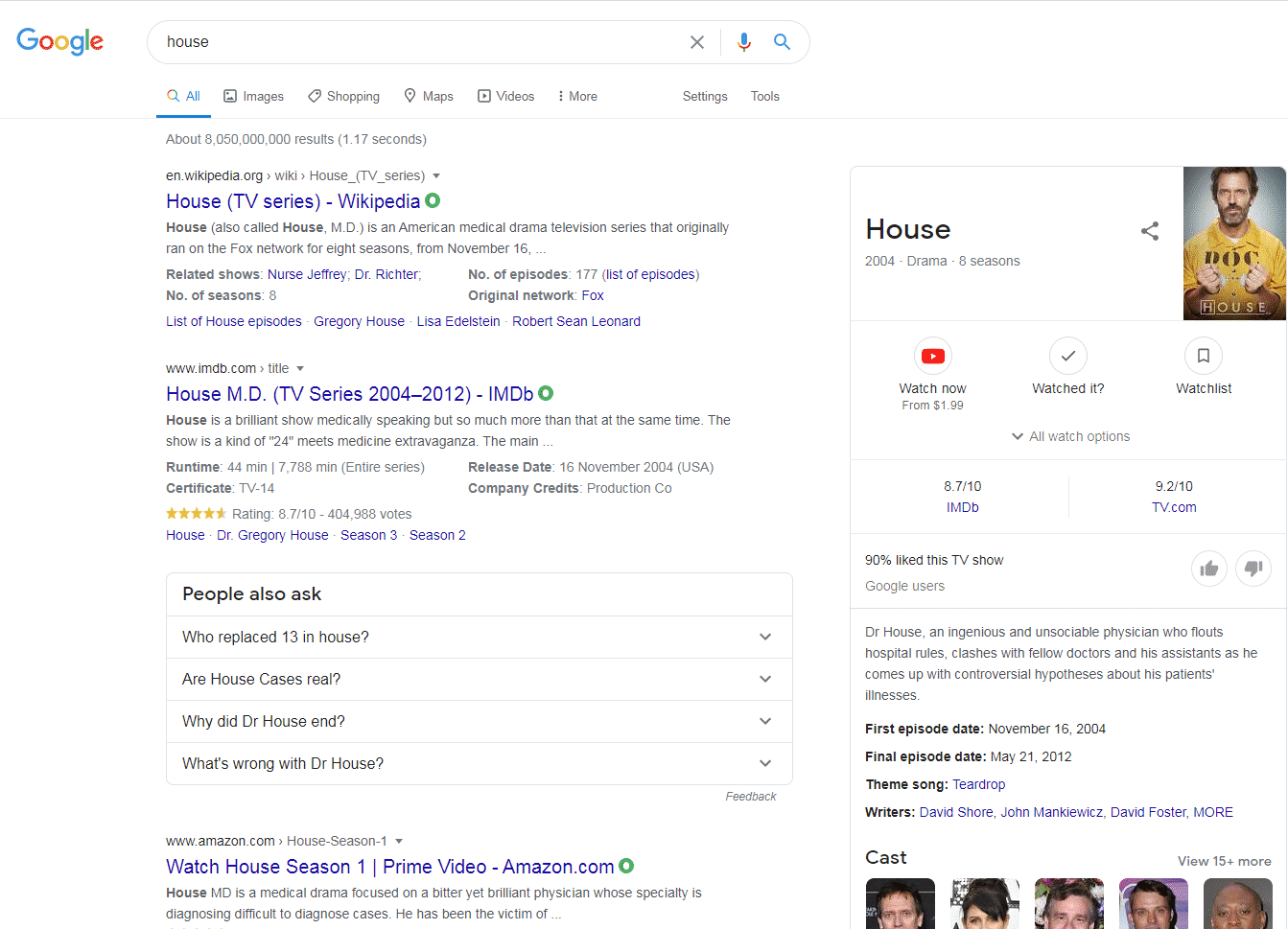
They think we’re looking for a TV show that aired in “the aughts”. As a real estate professional, that’s obviously not the best keyword. On the flip side, when we look up “toronto house”:
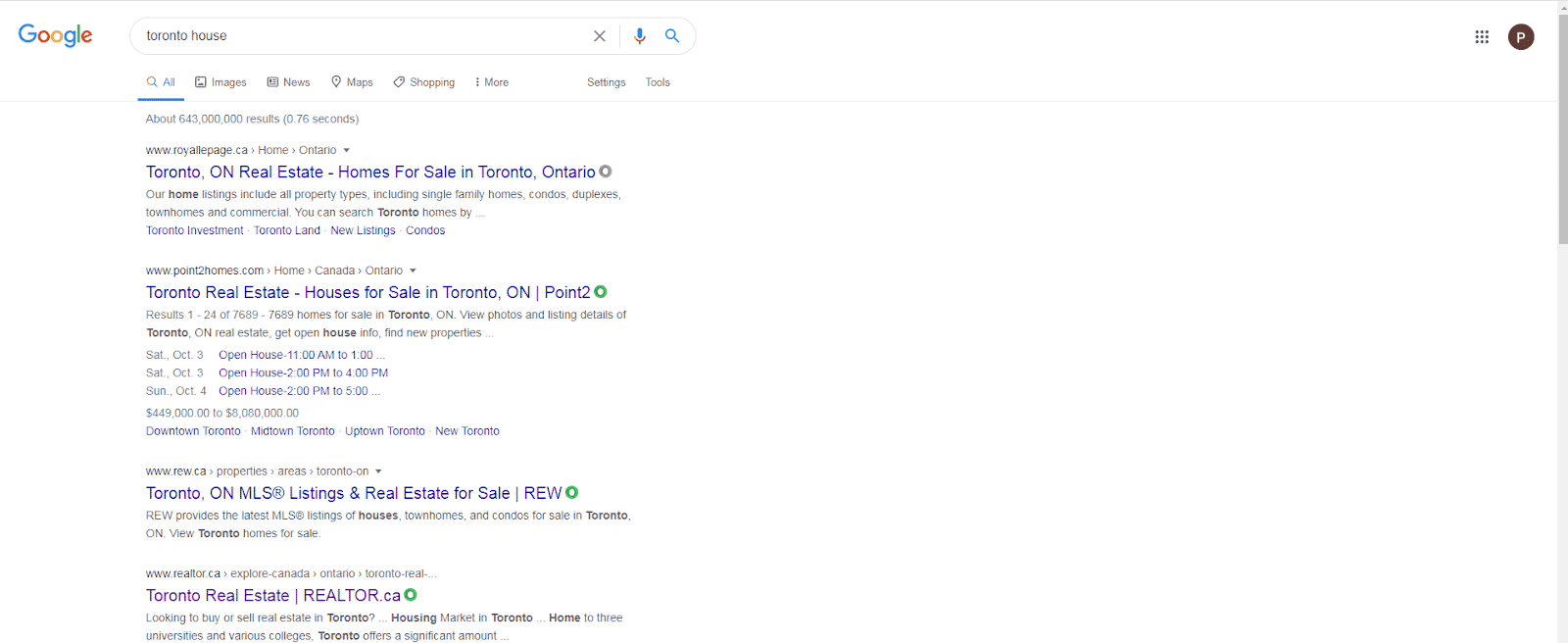
All of the top results are about real estate. That’s because Google knows if we’re looking up house + location, it’s much more likely we’re looking to buy a house. As you can imagine, when we get more specific about location (like “house in East York”), we’ll get real estate results specific to East York. This is keyword research – you figure out what search terms people are using when they intend to buy homes in your area, and you try to rank highly (show up in the top search results) for those terms.
How to Research Keywords
Broadly, there are two ways of doing keyword research: do-it-yourself, and using keyword research tools. The DIY approach is the one we just demonstrated – think of terms people might use when they’re looking to buy homes in Toronto, punch those terms into Google and other search engines, and see what results you get (and how many results you get).
Brainstorming your own keywords is a great way to start, but you can get an overwhelming amount of information. That’s where keyword research tools come in.
Take Ahrefs’s Keyword Generator for example. When we look up “toronto house”, we get the following results:
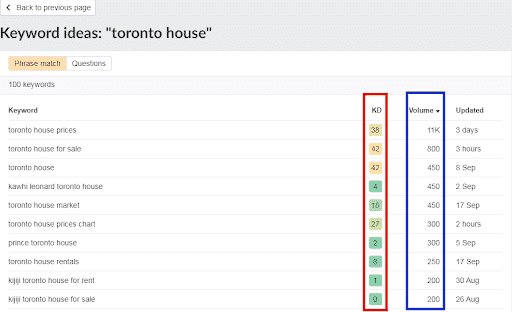
KD (in the red box) doesn’t stand for Kraft Dinner (or I’d have put it in the blue box, lol) – it’s “keyword difficulty”. The lower the keyword difficulty, the easier it will be to rank for that term.
The Volume (in the blue box) is simply the number of monthly searches the keyword generator estimates are made for that term. The more volume, the more likely it is that someone will search for the term. This means you want to find keywords with a low KD but a high volume. Getting accurate KD and volume predictions without keyword research tools is almost impossible.
Of course, you’ll also want to find relevant keywords. The term “Prince Toronto house” has a great KD/volume ratio, but it has almost nothing to do with real estate. You might still be able to use it to your advantage, though – more on that in the “Content” section.
A quick pro-tip: the keywords that usually have the best KD/volume ratio are known as “long-tail” keywords – they’re usually three to five words long, and useful for search engines trying to determine intent.
There are all kinds of keyword research and planning tools – here’s a list of 10 keyword tools to get you started. All of this keyword research is in service of our next topic:
Create Content
Content is a pretty all-encompassing term – if it’s on your website, it’s content. Generally, content refers to web pages, from your home page to your blog. Sometimes content refers to specific media (videos, infographics, etc.). We’re going to use it as a catch-all here, and our context clues will help you understand what we mean.
Why Content?
When you don’t have any content, what are people going to find when they look up those keywords you spent all that time researching? Nothing.
Constantly updating your content serves several purposes. It lets search engines know that you’re actively updating your site, and it gives you an opportunity to capitalize on your keyword research. What’s more, it gives your potential clients useful and actionable information. Let’s take a look at what kind of content can help Toronto real estate agents, and how to optimize your content.
Content and Search Intent
You’ve picked out some keywords you want to rank for. Let’s say one of them is “best neighbourhoods in Toronto”. We get the following results from Google:
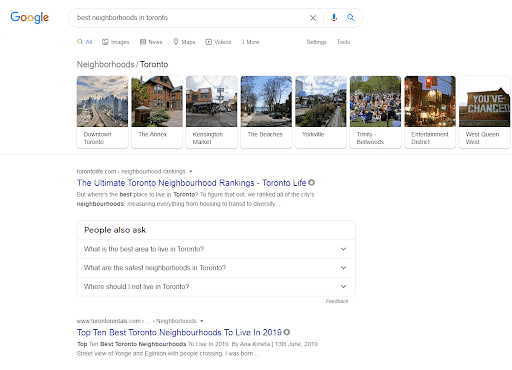
There’s actually a lot of information here. Google is guessing our intent is to find the best/safest places to live in the city (including the result “Where should I not live in Toronto?”). You’ll also see that the top two search results are ranking Toronto neighbourhoods, making it easier for users to compare neighbourhoods at a glance.
That means that if you want to rank for “best neighbourhoods in Toronto”, you’d probably benefit from making an article comparing Toronto neighbourhoods and posting them on your blog. Don’t be afraid to read and take inspiration from the top results. Don’t forget that many potential clients are new to the city. As part of our agency’s Toronto SEO strategy, we often target ‘newcomer’ keywords to capture this high-intent traffic before they even arrive in the GTA. Newcomers to Toronto are often looking for housing opportunities.
Is the top result a video? Make a video. An article featuring an infographic? Make an infographic. Battling against the tides is often the wrong way to go about things with SEO – do what others are doing, but do it better.
Location, Location, Location
The work of SEO professionals and real estate professionals isn’t all that different. We help clients who are searching for something specific, find the best results, and we help clients who are trying to sell, optimize their space to make it more attractive to prospective buyers.
Another way in which our work is similar is that location is incredibly important. For you, it’s an important sales point. For search engines (and us), it works the same way.
Search engines care deeply about location because people prefer results that are near them. This is doubly true for real estate professionals – people want a real estate agent who intimately knows the neighbourhood they want to buy or sell in. Both your clients and search engines want to know you’re an expert in a particular region. We can use this to our advantage:
Let’s say you’re focused on selling real estate in Etobicoke. You can make content like “The Top 10 Local Restaurants in Etobicoke”, “Etobicoke’s Neighbourhoods, Ranked”, “Etobicoke’s Best Kept Secrets”, “Outdoor Fun in Humber Valley Village” or other such things. This content is supremely useful to both your clients (who want you to demonstrate your expertise and want to know more about the area you specialize in), and to search engines (who want proof that you’re an expert real estate agent in Etobicoke).
Creating hyper-local content for neighborhoods like The Beaches or Corso Italia is exactly how we approach Toronto SEO to help our clients dominate local search results.
You are a local expert; your website needs to prove it. When you create content that answers specific local questions, you signal to Google that you are an authority in that region.
Video tours of your favourite spots, infographics about each neighbourhood in Etobicoke, articles – the more high-quality content you can make, the better.
Keyword Stuffing (Or What Not To Do)
We talked about keyword research and how it can guide your content creation. To rank for those keywords, you’ll want to include them in your content, but be very cautious not to overuse the keyword.
Overuse of keywords is called keyword stuffing, and it can tank your rank. Search engines are getting smarter – when you’re using semantically-related phrases and terms, they’ll know that you’re still on topic and relevant.
In other words, you want to focus on making high-quality, readable, sharable content (more on that in the link-building section). Write what you know, use accurate, well-researched points, and keep things organic. Don’t focus too much on the question “Is this optimized for SEO?”. Instead, ask yourself “If I was searching for this term, would I be happy finding my content as a result?”. When the answer is yes, you probably have good content.
Trust, but Verify
While making great content will certainly help you attract more clients, it’s a good idea to verify your content’s performance.
Tools like SEMRush’s Content Analyzer can give you a better idea of what content is doing well, and how you might adjust your content for better performance. You’ll be able to see how many words your articles are, how many shares they have, how many backlinks they have (you’ll learn more in Link-Building), bounce rates, average time spent on the page (if you’re using Google Analytics/Search Console), and more.
You should also be monitoring the keywords you’re trying to rank for constantly so you can see how changes to your website have affected those keywords. Keyword monitoring is pretty tricky, because search engines are also changing their algorithms all the time. Don’t get too jumpy if you see you’ve fallen in rank – it may be a search engine adjustment, and you’ll likely need a targeted approach to get back to the top.
A brief note on SEO tools here – most of them are freemium: You’ll get a limited amount of information, then you’ll have to pay. Unless you can code complex data-gathering bots to scour search engines for info yourself, you’ll have to use these tools to optimize your optimization.
Build Links
We’ve made reference to link-building a couple of times already, so I’m sure you’re curious about what it is. According to Moz, off-page SEO probably influences more than 50% of your ranking. In other words, activities that take place on a website that isn’t yours are the most important ranking factor.
How the heck are you supposed to influence your off-page SEO?
You’ve already taken the first step – built high-quality content. The next step is to get links. If you checked out the Moz article, you probably saw a lot of complicated-looking technical information in their infographic. Don’t worry about all that. The basics are simple: you want websites that search engines trust, to link to your website.
Off-page SEO (links from other websites to yours) is a massive ranking factor. Think of a link as a “vote of confidence.” If a trusted site links to you, Google trusts you more.
That’s because search engines aren’t that great at determining what “high-quality” content looks like. They’re not subjective beings, so they can’t make value judgements the way humans can. Instead, they rely on links from other sites that they know are trustworthy, to act, essentially, as endorsements of your content.
Finding Authoritative Websites
Back in the day, people took advantage of flaws in search engine algorithms to boost their ranking simply by spamming links to a new site on another website they operated. That doesn’t fly anymore. Instead, you have to find websites that search engines consider to have high authority – in other words, reputable websites. You’ll also want to find websites that don’t spam links.
How do you find this information? If your first thought was “some obscure SEO tool”, you’re absolutely right!
In this case, Ahrefs and Moz both have useful authority checking tools (using both is a great idea, as they have different methods of estimating a site’s authority). We’ll use Moz’s tool for our examples. You’re a real estate professional in Toronto, which means you want to find sites that are related to real estate, Toronto, or both. Given that, we’ve gone ahead and found some websites that might be useful for link-building.
First, blogTO, a site you’re likely familiar with. Let’s do our Moz domain analysis:
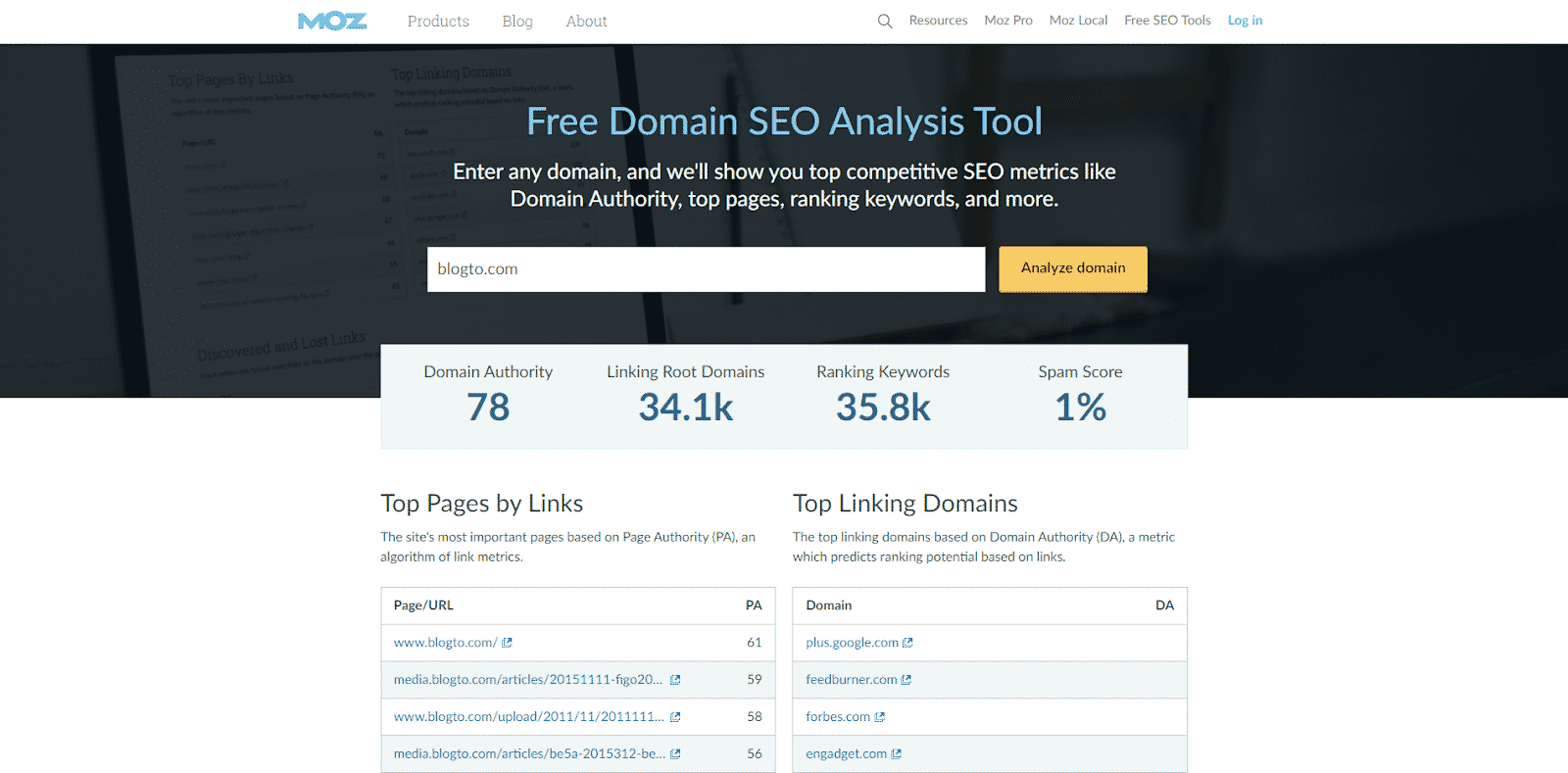
That’s a pretty good looking analysis! They have a domain score of 78/100, which is pretty high. They are not considered spammy at all, so links to your web pages are bound to look good. You can also get information about the pages on their site that tend to get the most links – great if you want to try to match their style.
Now let’s look at a lesser known site, Urban Toronto:
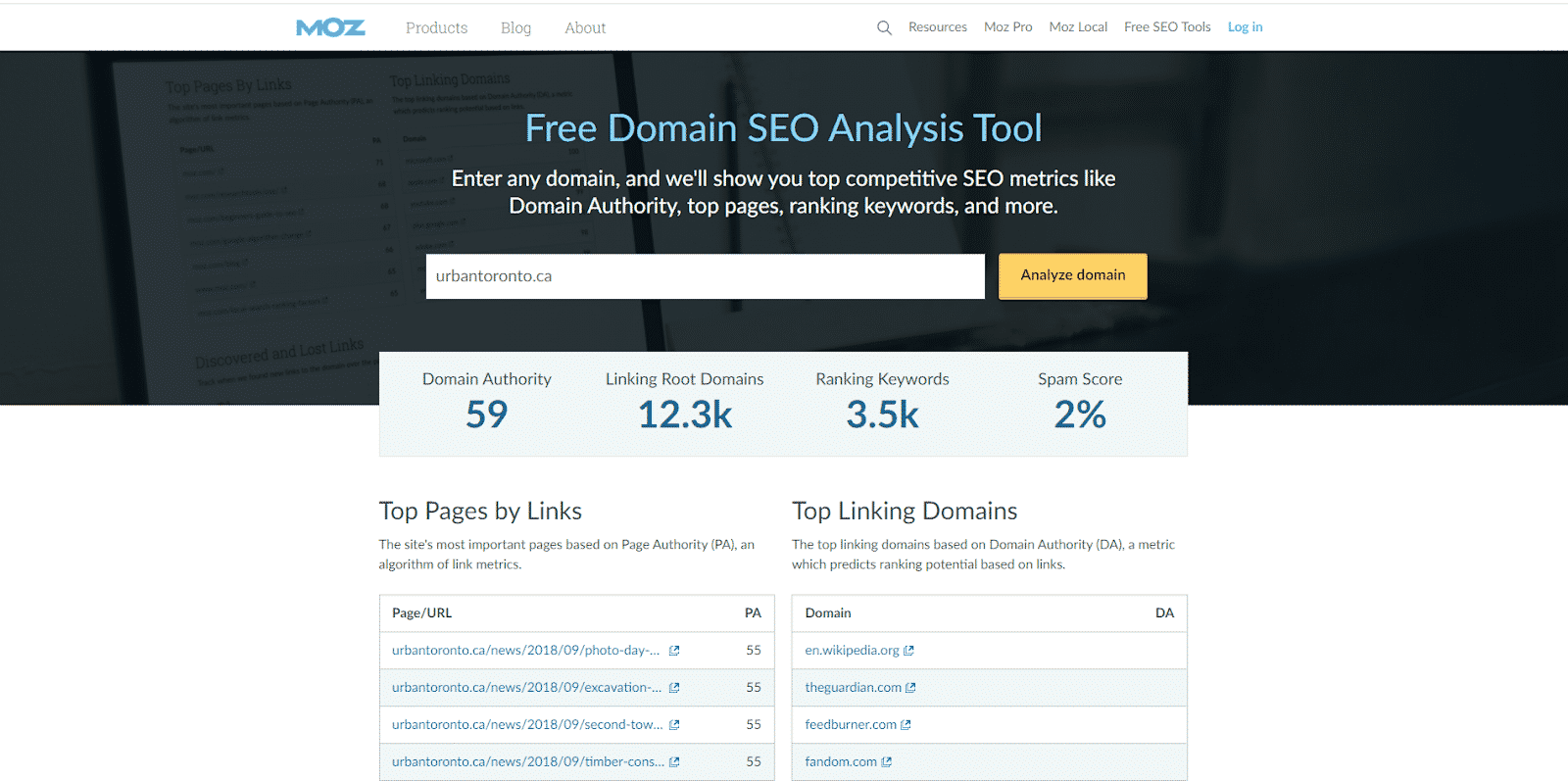
While it has a lower domain authority and a higher spam score than BlogTO, Urban Toronto might still be a great choice. They’re focused on architecture and skyscrapers, so there’s definitely an abundance of real estate-related content they might be interested in.
Getting Links
Now that you’ve found some high authority websites (for more tips on how to do this, check out our comprehensive guide to local SEO), it’s time to get them to link to you. There are two ways of going about this:
- Natural links. This happens without you interacting with the other website – they see your content organically, love it, and link to it.
- Manually-built links. This happens when you ask (directly or indirectly) for other sites to link to your content.
Natural links are the holy grail, but the only way you’ll get them is by creating incredible, sharable content, posting it on your site and social media, then crossing your fingers.
We have a lot more control over manually-built links. You can get these links by either:
- Showing websites your content and asking them to link to it
Or
- Creating posts for their website, and including a link to your content in those posts (guest posting)
Now there are a few ways of incentivizing people to link to your content, from the skyscraper technique to simply pitching content ideas to various websites. Keep your on-page content focused on real estate in Toronto whenever possible, and try to emulate the style of the website you’re posting to when guest posting.
You’ll want to be careful when link-building; some sites don’t take well to you sneaking links to your own content into guest posts, while others overtly welcome such efforts. Don’t overpost on one website, and keep the quality of your content as high as possible – after all, if your guest posts get readers, you’re more likely to get clicks on your link.
Help Search Engines Help You
Now that we’ve looked at on-page (content) and off-page (link-building), it’s time to look at some of the more technical elements. First, we’re going to look at how search engines use structured data and internal links to navigate your website:
Even the best content won’t rank if Google’s bots can’t read your website.
Use Structured Data: Use the Google Structured Data Markup Helper to add “schema” to your site. This allows Google to generate Rich Results—listings that include star ratings, reviews, and images directly in the search page. This visual “pop” increases click-through rates.
Master Internal Linking: Think of your website like a shopping mall. You need clear hallways (links) leading from your main entrance (homepage) to your stores (content pages). A strong internal linking structure ensures Google’s bots don’t get “lost” while crawling your site.
Structured Data for Toronto Real Estate Websites
First, put your website’s URL into the Google Rich Results Tool. It will take a few moments, but if your structured data is properly set up, you should get a result that looks like this:
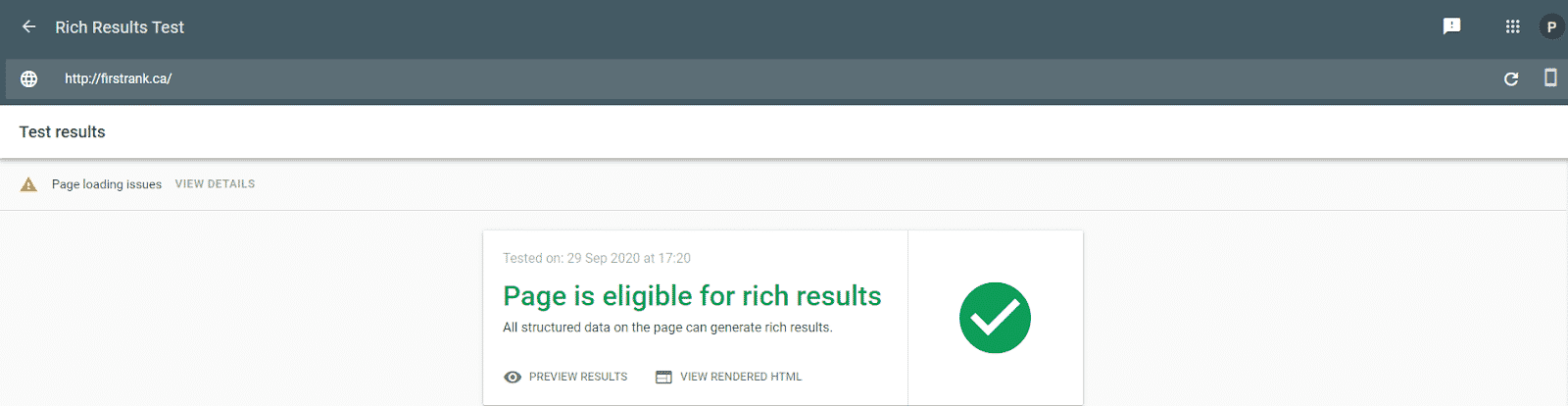
Rich results are the future for search engines – they include things like images, reviews, and more. You need structured data to get rich results. Reviews and images are key to real estate – seeing is believing, after all.
Structured data used to be somewhat complicated to figure out, but Google wants you to be eligible for rich results, so they make it easy. Just go to Google’s Structured Data Markup Helper, follow the instructions, and you’ll have structured data in no time.
Internal Links
Think about your website like a shopping mall. Some people are going to want to read your blog, others are going to want to look at reviews, and others still will want both. Some people will be looking for something else entirely.
The easier it is to navigate around the shopping mall (your site), to get to different stores (your pages), the better. Optimally, you want all of your content to have links to other content you control, be it your homepage, product pages, or some other page. The easier it is to access different pages from different points, the better. That said, you don’t want to link to every page from every other page – that would just get confusing. It’s best to have all of your pages lead back to a central point, like the homepage – kind of like a mall that has hallways leading from its anchor stores to the central food court.
Search engines use bots to crawl your website – these bots are an important part of ranking algorithms. When they get lost, they’ll send signals that your site isn’t easy to navigate. That means a well thought-out internal linking structure is important for both your clients and your SEO.
NAP Citations
On our website, we have a comprehensive guide to citations in Canada, so we’ll keep this brief. Search engines want to know that your company is consistent – that you have one name, and that each of your locations has one “Contact Us” phone number. That makes it easier for them to list your contact information without worrying that they’ve got it wrong.
As a real estate professional, you know how important that first impression is – calling your office only to find it was a wrong number could turn a potential client off of talking with you entirely.
Basically, you want to make sure you’re listed with Yellow Pages, and that you’re not incorrectly listed with Facebook, Yelp, or any other business directory. Check out our guide to local citations to learn more.
Prioritize Speed and Mobile Experience
Speed is a ranking factor. If your site is slow, users will bounce, and Google will demote you.
Mobile-First is Mandatory: Many real estate sites—even major ones like REALTOR.ca—often struggle with mobile optimization. This is your opportunity to beat them.
Check Your Vitals: Use Google PageSpeed Insights to test your site. If your mobile score is low, you are likely losing half your potential traffic.
Fix the Technicals: Look for specific recommendations like “First Contentful Paint” in your speed report and have your web developer address them immediately.
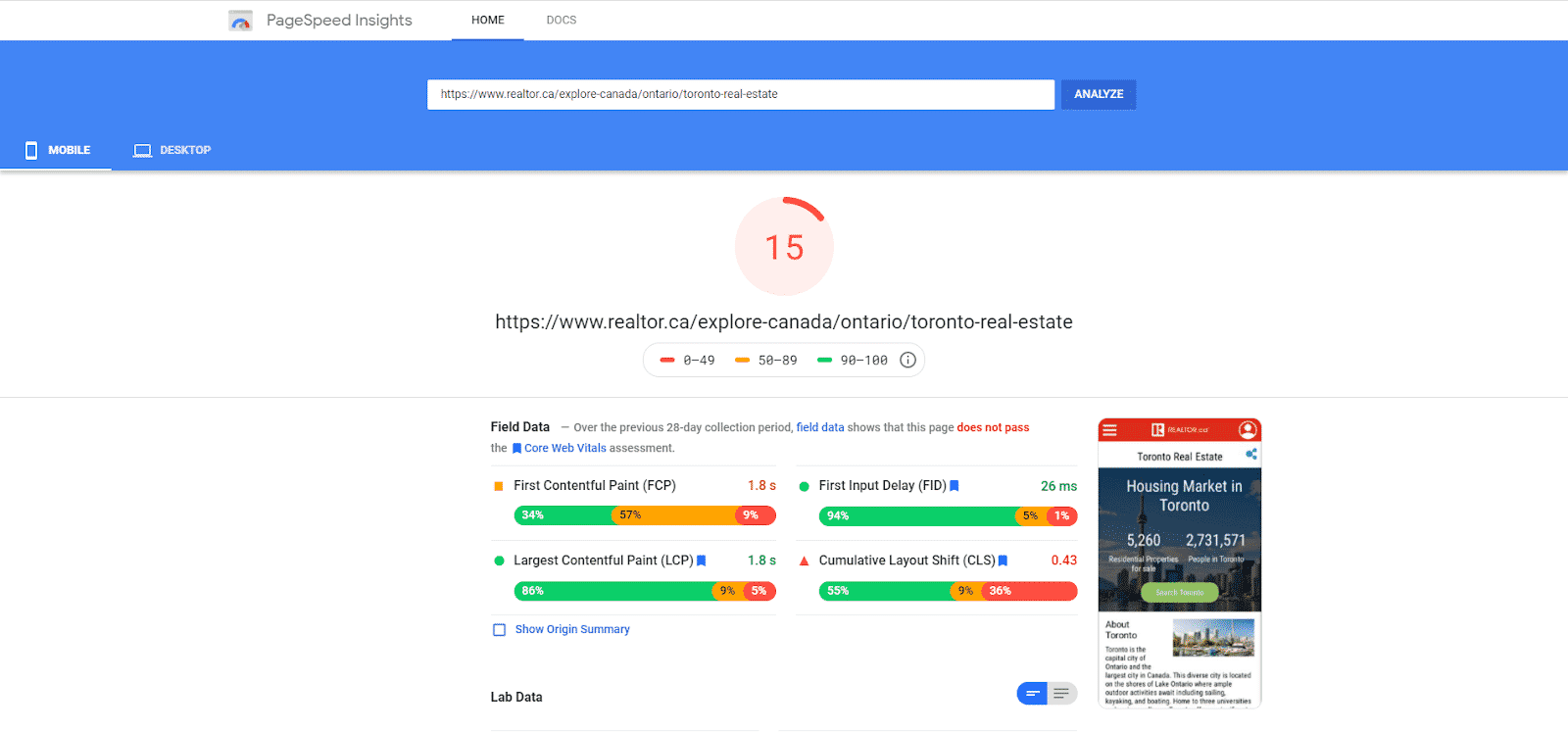
Let’s use the Toronto REALTOR® page as an example. Here’s the result for mobile:
Here’s the result for desktop:
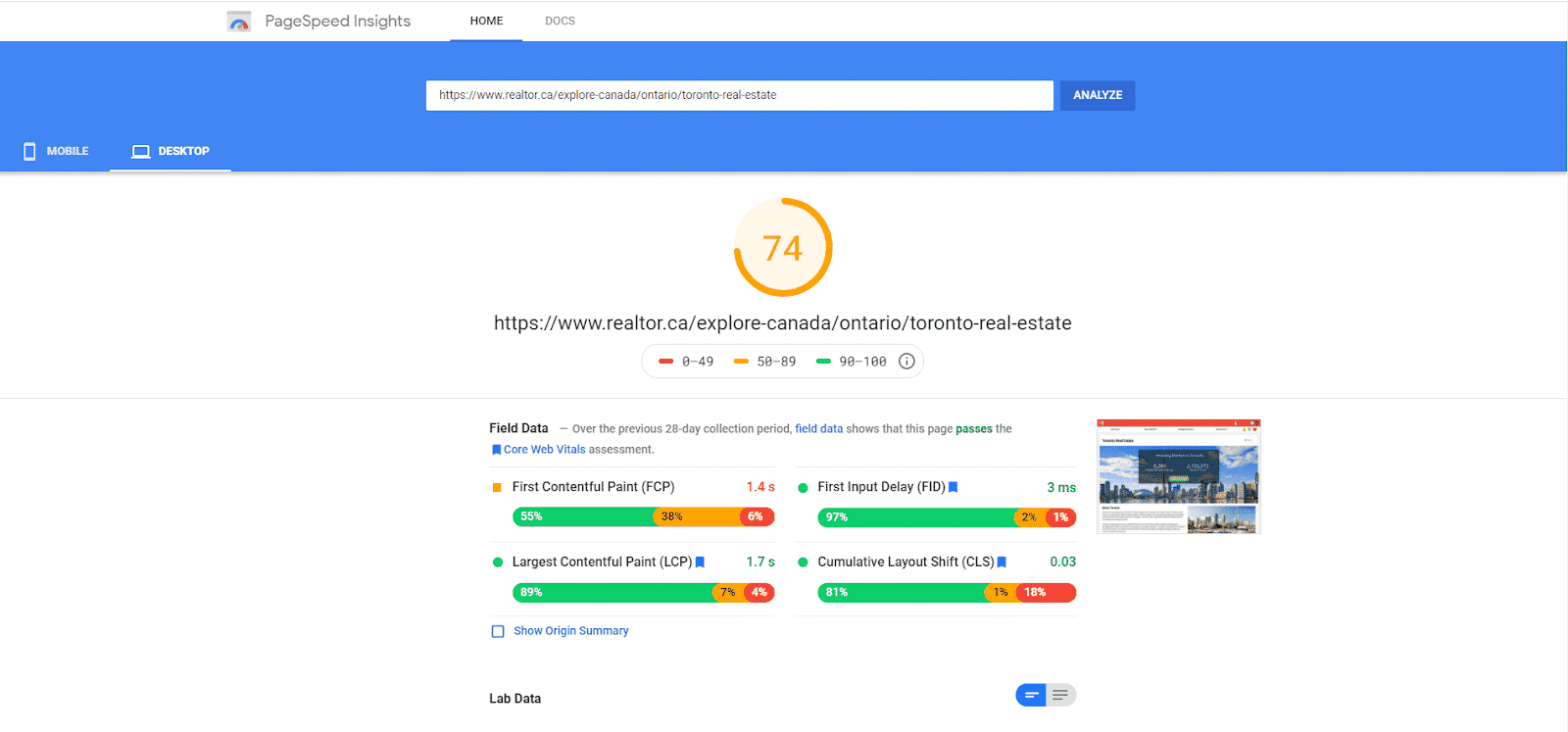
Look at the difference in those scores! Honestly, our friends at REALTOR® have made quite a big mistake here – their website is not well-optimized for mobile at all. Don’t make the same mistake – make sure your website is responsive and loads quickly on mobile devices.
Below your results, Google will give you recommendations as to how you can speed up your website. It’s all pretty technical, so get your webmaster or SEO specialist to tackle it for you if you have no idea what First Contentful Paint even begins to mean.
There are quite a few other tips we could give, but if you follow the five tips laid out here, you’re going to be doing more to boost your SEO than most. Those who have followed none of these tips previously and implement them all will probably see a drastic boost in rankings within a short period of time.
There’s so much more we can do together. Whether you want help implementing these tips or you want a more comprehensive strategy for online real estate marketing in Toronto, we’re here to help. Take a look at the variety of guides we have for local and our comprehensive Toronto SEO Services page to see how we help agents grow., and give us a call.
Last Update: 6 Jan 2026

Jacob Kettner is the owner and CEO of First Rank Inc., a digital marketing agency based in Winnipeg, Manitoba. He currently sits on Manitoba Chamber of Commerce Small Business Advisor Council which assists people grow their small businesses in Manitoba.