This Canadian e-commerce SEO case study shows how First Rank turned a competitive, migration-sensitive search program into measurable growth. The retailer needed stronger commercial-page coverage, better top-three visibility, and a safe Shopify Enterprise transition. First Rank responded with technical QA, revenue-led prioritization, intent-focused content, URL consolidation, internal linking, authority building, and integrated SEO and GEO. The result is a stronger organic foundation with approximately 2,235 ranking keywords, 528 top-three positions, 9,771 monthly organic visits, and 2,771 visible LLM-referred sessions.
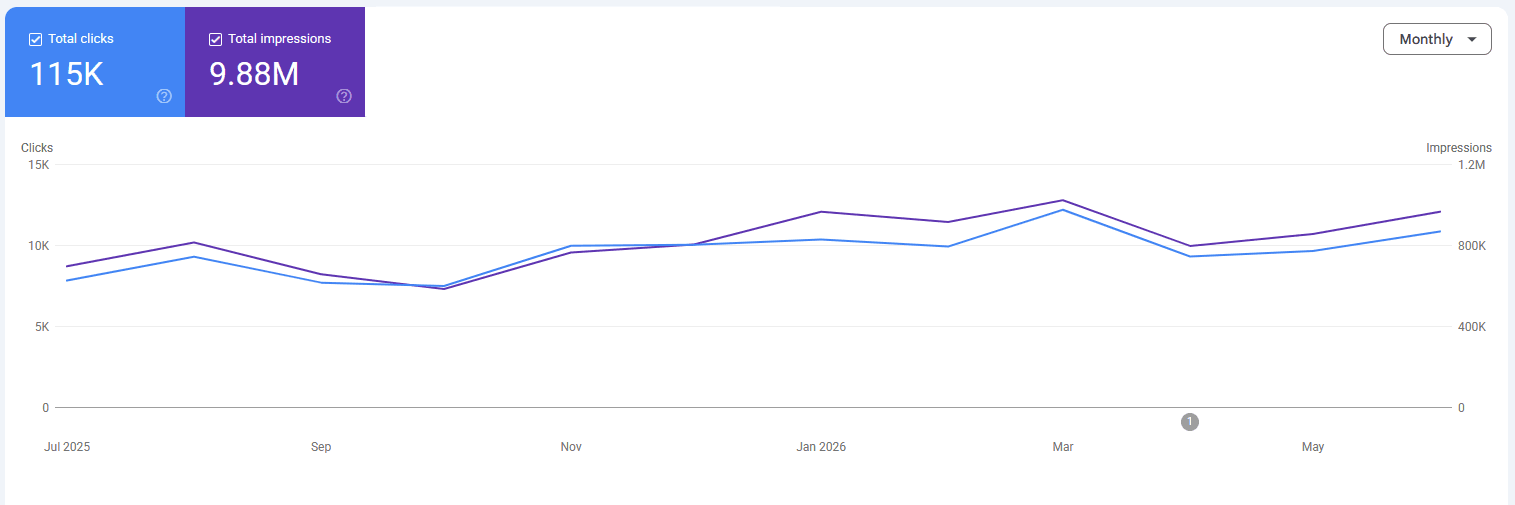
- 311.1% increase in organic clicks: 115,104 clicks versus 27,998 in the previous 12-month period
- 364.0% increase in organic impressions: 9,884,128 impressions versus 2,130,189
- Average Google Search position improved from 19.2 to 11.3
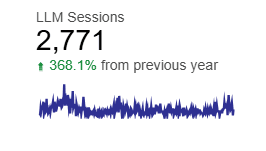
- 2,771 visible LLM-referred sessions, up 368.1% year over year.
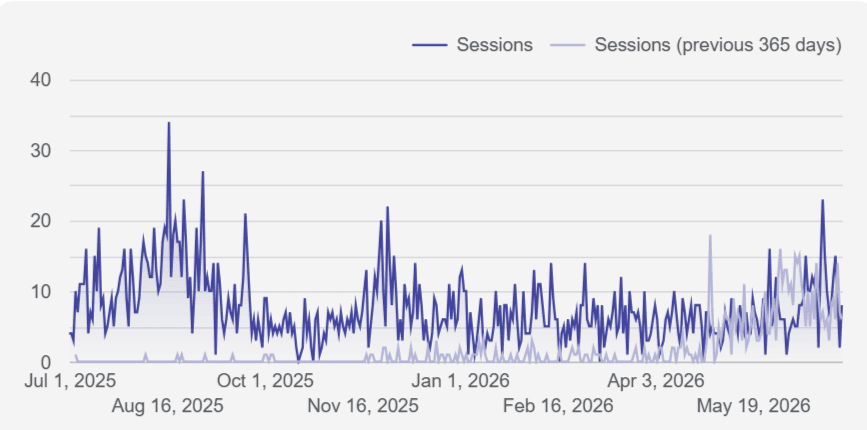
The campaign broadened the retailer’s visibility across brand, collection, category, and buyer-guide searches while establishing measurable referral traffic from AI platforms. The strongest evidence is not one isolated ranking win; it is the combination of wider reach, better average positions, and stronger coverage of commercially relevant topics.
The Opportunity

The retailer already had a strong product catalogue and meaningful organic demand. The growth opportunity was to connect those strengths through better technical foundations, more complete commercial pages, clearer topic coverage, and a deliberate internal-linking system.
The campaign had to address 6 constraints:
- Uneven coverage across important brand, collection, and category pages
- Commercial pages that ranked on page 1 but remained outside the highest-click positions
- SEO and measurement risk associated with a Shopify theme migration
- Under-optimized location pages
- Underused internal-linking opportunities between informational content and product-led pages
- A keyword footprint and top-three ranking gap against larger Canadian competitors
This was not a rebuild from zero. It was an opportunity to turn scattered strengths into a repeatable, commercially focused search strategy.
The Strategy
Prioritize By Business Value & Ranking Distance
Rather than optimizing every page evenly, First Rank concentrated effort where commercial upside was greatest: High-revenue brand and collection pages, page-one terms within striking distance of the top three, and missing categories with proven demand. This turned the roadmap into a portfolio of measurable opportunities, not a generic task list.
- Expanded top-revenue collections and near-win pages for top brands including Secrid, Bellroy, Briggs & Riley, and Thule
- Built or improved collection pages for carry-on, crossbody, travel-pack, and related category searches
De-Risk The Migration & Measurement
First Rank treated the Shopify theme change as a business-critical migration. Monthly ranking and revenue checks kept the work accountable, while technical QA protected headings, metadata, schema, redirects, indexation, and analytics before growth work scaled.
Connect Education To Purchase Intent
First Rank designed content around how shoppers compare, validate, and choose. Airline baggage guides, sizing content, brand comparisons, and product-selection articles captured discovery demand, then internal links moved users and relevance toward commercial collections.
- Used comparison topics such as Secrid versus Ekster, Briggs & Riley versus TUMI, and Samsonite versus Briggs & Riley
- Added concise answers, FAQs, and buying guidance below product grids while keeping hero sections focused on conversion
Consolidate Architecture & Reinforce Authority
The team improved the path from discovery to conversion by consolidating overlapping URLs, updating internal links after redirects, strengthening navigation and filters, and pointing supporting pages back to primary category hubs. Targeted backlink work reinforced the same priority topics.
- Reduced cannibalization and preserved signals through 301 redirects and complete internal-link updates
- Made priority collections easier to find through navigation, footer, and contextual links
Build SEO & GEO From The Same Foundation
First Rank did not treat AI visibility as a separate campaign. Clear answers, comparison content, stronger entity coverage, FAQ schema, and deliberate relationships between guides, brands, and collections made the site easier for both search engines and AI platforms to interpret.
- Structured collection FAQs and comparison content so key product guidance was easier to extract
- Strengthened brand, product, and category relationships across supporting and commercial pages
Results
Organic Search Growth
Google Search Console data for July 2025 to June 2026, compared with July 2024 to June 2025, shows substantial year-over-year growth:
- Organic clicks: 115,104, up from 27,998 (+311.1%)
- Organic impressions: 9,884,128, up from 2,130,189 (+364.0%)
- Average position: Improved from 19.2 to 11.3
Together, these metrics indicate that the retailer appeared for a much broader set of searches while moving materially closer to the most visible positions.
Commercial Keyword Gains
Tracked ranking movement also improved across brand and category terms with clear buying intent:
- Bellroy Canada: #6.6 to #4.1
- Osprey Canada: #5.5 to #3.6
- carry on backpack: #8.2 to #4.6
- Secrid Canada: #5.3 to #3.6
- best carry on luggage Canada: #6.2 to #5.4
These gains moved priority terms closer to the highest-click portion of page 1 while creating a stronger base for future top-three growth.
Balanced Organic Growth Across Informational & Commercial Pages
Q2 2026 performance shows that organic growth was distributed across brand discovery, educational resources, and revenue-focused collection pages:
- Homepage and brand discovery: 5,272 clicks
- Luggage sizing and measurement content: 2,016 clicks
- Airline baggage guidance content: 1,780 clicks
- Premium accessories collection page: 870 clicks
- Carry-on compatibility collection page: 700 clicks
This distribution shows First Rank’s ability to connect informational search demand with brand discovery and commercially valuable collection pages without relying on a single content type.
Measurable Visibility From AI Platforms
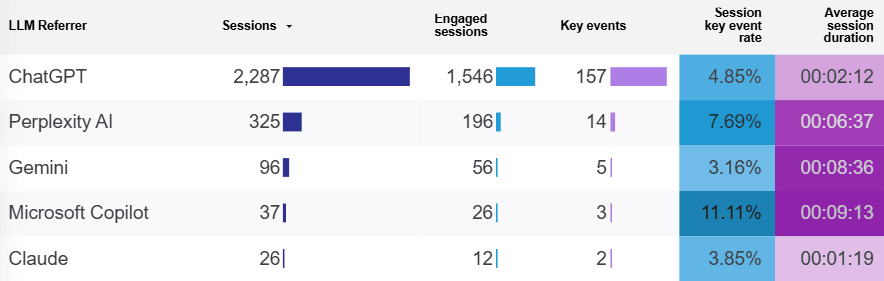
GA4’s visible LLM-referral reporting for the 365-day comparison window recorded:
- 2,771 LLM-referred sessions, up 368.1% from the previous year
- 1,836 engaged sessions across the five tracked AI platforms
- 181 key events
ChatGPT generated 2,287 sessions, 1,546 engaged sessions and 157 key events. Perplexity AI added 325 sessions, 196 engaged sessions, and 14 key events. Gemini, Microsoft Copilot, and Claude contributed another 159 sessions and 10 key events combined.
Microsoft Copilot recorded the highest session key event rate at 11.11%. Gemini and Copilot produced the longest average session durations at 8:36 and 9:13, showing that smaller AI channels can still deliver high-engagement visits.
Leading AI-entry pages included the homepage, Secrid and Samsonite collections, Osprey product pages, and the personal-item bag guide. This is direct evidence that AI-assisted journeys contributed measurable site activity. It should be read as a conservative signal rather than a complete measure, because GA4 can only attribute visits when a detectable referral is passed.
Why The Campaign Worked
- It matched how people shop. Travellers compare brands, check airline rules, research bag sizes, and browse categories before buying.
- It connected education to commercial intent. Guides captured broad demand while internal links directed users and relevance toward product-led pages.
- It improved pages closest to revenue. The strategy treated collection and brand pages as core SEO assets, not secondary destinations.
- It reduced technical drag. Active migration QA, tracking repairs, metadata work, schema review, and indexation checks helped protect momentum.
- It built SEO and GEO together. Topical completeness, entity clarity, concise answers, comparisons, and internal relationships supported both search experiences.
Where The Retailer Is Now
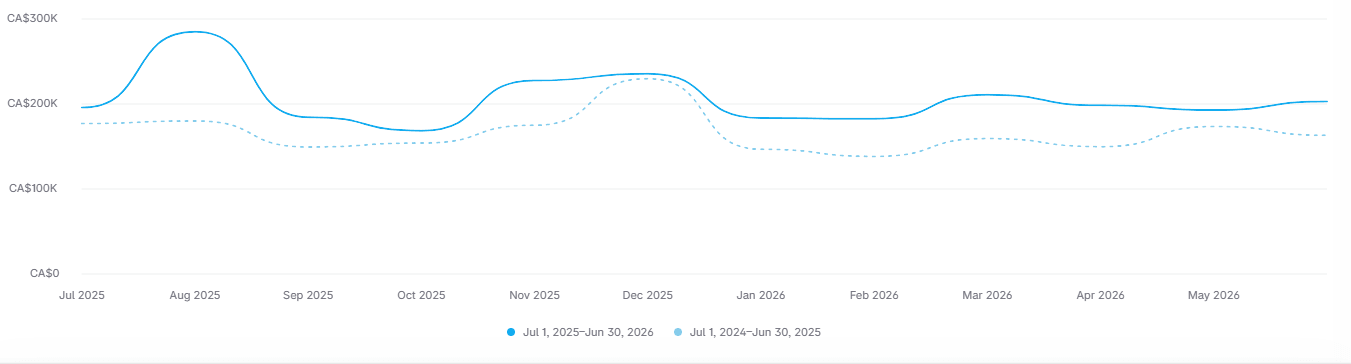
Seeing month-over-month new revenue highs from organic traffic, with approximately 2,235 ranking keywords, 528 top-three rankings, and 9,771+ monthly organic visits last month, with established strength across multiple industry non-branded keywords and high rankings on top brand searches.
The First Rank Difference
First Rank with Dalin lead helped this Canadian retailer turn a fragmented organic opportunity into a broader, more commercially valuable search footprint. The business now has stronger technical foundations, better coverage of high-intent topics, improved page-1 positions, and measurable participation in AI-assisted brand discovery, with a clear roadmap for continued growth.
Take the next step with confidence. Contact us today to explore the right solution for your situation.